When Can My Baby Face Forward in a Carrier?
Written by Connor Bringas on April 13, 2023.
As your baby gets older and more curious, you’ll want to share the many things you see and experience with them. If you’ve adopted the ultimate parent hack of babywearing, you’ve probably considered various carrying positions, like the front-facing position, to give your baby more exposure. When done safely, front-facing carrying can give your baby a new view of the world, while keeping you both comfortable with the Tushbaby Hip Seat Carrier. But as with any carrying method, safety for your baby (and yourself) is a top priority.
Typically, babies develop the strong neck muscles needed to support their heads between 4-6 months of age. Until your little one reaches this milestone, it's best to keep them facing inward to ensure proper head and neck support.
Let’s explore everything you need to know about when babies can face out in a carrier—and if you’re searching for the best front-facing baby carrier, don’t worry, Tushbaby has you covered!
When Can I Face My Baby Forward in a Carrier?
Table of Contents
- When Can My Baby Face Forward in a Carrier?
- How Long Should a Baby Be Forward-Facing in a Carrier?
- Why Can’t Newborns Face Forward in a Carrier?
- Can a 3-4 month Old Face Out in a Carrier?
- How Will I Know If My Baby Likes Facing Forward in a Carrier?
- Do Baby Carriers Cause Hip Dysplasia?
- How Can Carriers Aid Baby's Development?
- Switching from Forward Facing to Another Position with Tushbaby
When Can My Baby Face Forward in a Carrier?
Babies have phased development, so it’s only natural for parents to wonder when you can wear your baby facing out of their carrier. The most important thing to know is that your baby needs to be strong enough to support their own head before trying a forward-facing carrying position. Front-facing carrying doesn’t allow your baby to rest their head on your chest, so it’s best to keep them facing you until they develop strong neck muscles. While all babies develop at different rates, babies can typically face forward in a carrier once they develop full head and neck control—usually between 4–6 months old.
How Long Should a Baby Be Forward-Facing in a Carrier?
How long you carry your baby facing forward will depend on your baby's comfort and stimulation levels. As your baby is still getting used to a big world, they can become overstimulated if they’re facing forward for long periods of time.
Start slow—20–30 minutes at a time is best. With the Tushbaby Hip Seat Carrier, you can easily switch positions if your baby gets overstimulated. Babies can get over-excited by all the new sights and sounds, so watch for signs of discomfort or fussiness. If your baby seems overwhelmed, switch them back to facing you to help them feel secure and calm.
If you’re just starting out, try carrying them front-facing for no longer than 20-30 minutes at a time. Gauge how your baby responds and go from there—you’ll know what’s best for your baby.
Why Can’t Newborns Face Forward in a Carrier?
Newborns need extra head and neck support, which they can only get from facing inward. Without this support, their chins may fall forward and obstruct their airways. So, for those first few months, keep your baby nestled close to your chest for optimal safety and bonding. There’s plenty of time to enjoy that front-facing carrying as your baby develops.
Since you won’t always be carrying your baby, it’s also important to learn which way babies should face in a stroller when you’re out and about. For safe babywearing from birth, keep newborns facing inward for head and neck support and learn more about hip-safe carriers.
Can a 3-4 month Old Face Out in a Carrier?
At 3-4 months, your baby may start to poke their head around while you’re carrying them face-to-face. If you’re considering the transition to front-facing carrying, keep in mind that your 3-4 month old must be able to fully support their head on their own. If your baby’s head tilts forward while sitting front-facing, that’s a sure sign this transition was too soon. Switch your baby back to facing you to keep them safe until they fully develop this strength.
The Tushbaby Hip Seat Carrier adapts as your baby grows—use inward-facing early on, then transition to forward-facing once they have full head and neck control. Whether breastfeeding, bottle-feeding, or just carrying, Tushbaby adapts to your needs and your baby’s comfort.
How Will I Know If My Baby Likes Facing Forward in a Carrier?
When the time comes for your baby to face forward in a carrier, if your baby enjoys facing out in their carrier, you’ll know—look for smiles, curiosity, and engagement. On the flip side, fussiness or signs of overstimulation mean it's time for a break or to switch them back to facing you. Make the experience engaging by pointing out different objects and talking about the sights around you.
Do Baby Carriers Cause Hip Dysplasia?
There’s some debate about front-facing carrying, mainly concerning hip placement. Tushbaby’s hip seat carrier is designed to support healthy hip development with what’s often referred to as the “super-squat” position. Ensure your baby has full head and neck control before trying this position. Always do a bit of research and talk to your doctor to find carriers that promote healthy hip growth, like Tushbaby.
How Can Carriers Aid Baby's Development?
Front-facing carrying can stimulate your baby’s curiosity and learning. As they observe the world around them, their brain development gets a boost. Naturally, your baby will start wanting to get down and explore as they get older, too. With Tushbaby’s hipseat carrier, your baby can easily get up and down to explore without you having to go through the hassle of taking on and off a complicated carrier—simply pop them off when they want “down!” and carry them comfortably when they want “up!!” again. Tushbaby is so popular because it makes the transition to facing forward a breeze.
Just be mindful of overstimulation in your baby—if your baby needs a break, simply turn them back to face you for some calming nuzzle time. Discover more about how babywearing supports development in our Benefits of Babywearing guide.
Switching from Forward Facing to Another Position with Tushbaby
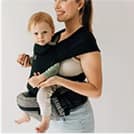
With the Tushbaby Hip Carrier, switching from forward-facing to inward or side-carry positions is effortless. The simple, open design allows you to seamlessly transition between carrying positions without taking the carrier off. Just lift and flip your baby to face forward or inward as needed. Remember to keep the carrier high and tight above your hips for the best support, and always hold onto your baby with one arm for safety.
The best baby carriers make your life easier, not harder. Enjoy life's adventures with your baby, whether they’re facing forward or not, with Tushbaby’s supportive hip seat carrier.
With four carry positions, Tushbaby carriers make it easy to transition your baby as they develop. Simply lift and flip your baby to front-facing for the finest seat and view in the house. Just be sure the carrier is strapped high and tight above your hips at your natural waist for the best benefits, and be sure that you’re always holding onto your baby with one arm for safety.
Ready for the next stage of babywearing? Explore the Tushbaby Hip Carrier—designed for safe, comfortable transitions from facing in to facing out.


;
)




Leave a comment